

Compare
Epoxy or tile for a garage floor?
The short answer: epoxy for almost every garage, because it is seamless and oil does not soak into a surface with no joints in it. Tile if you work on cars hard enough that being able to replace one square matters more. We install epoxy and not tile, which you should know before you read the table.
Side by side
The honest comparison.
Nine rows, and tile wins two of them outright. A comparison that found every point in our own favour would be worth nothing to you.
| What we’re comparing | Epoxy coating | Tile |
|---|---|---|
| What goes on the slab | A bonded coating system: the slab is diamond-ground, then primer, a pigmented base and a clear topcoat go on as liquid and cure into one surface. | Individual tiles bedded in mortar over the slab, with grout in the joints between them. Interlocking plastic garage tiles are a different product again, laid loose over the concrete. |
| Seams | None. It is a single continuous surface from wall to wall, which is the main reason it wipes clean. | A grout joint around every tile. That is a lot of linear feet of joint in a two-car garage. |
| Oil, brake fluid and spills | Sealed and chemical resistant. Spills sit on the surface and come up with a wipe rather than soaking in. | The tile face handles it well; the grout is the weak point. Grout is porous unless it is sealed and kept sealed, and it is where stains end up. |
| Dropped tools and jack stands | A coating is only as sound as the concrete under it. A hard enough point impact can chip the coating and the slab together. | Genuinely better here. A concentrated point load can crack a tile, but one cracked tile is one tile, which is the next row. |
| Repairing damage later | Repaired by patching and re-coating an area, and a patch is visible if the finish is metallic. This is the honest weak spot. | Tile's real advantage: lift the damaged one, replace it, re-grout. Keep a box of spares from the original batch and it is close to invisible. |
| The slab underneath | Everything depends on the bond, so the slab has to be sound and dry. We take a moisture reading and grind rather than acid-etch precisely because of this. | Mechanically bedded rather than bonded, so a marginal slab is a different kind of risk, but it still needs to be flat, and it still needs to be dry. |
| How long it takes | Most garages are coated in a day. Walkable the next, driveable in three, with a written 5-year warranty. | A multi-day job by nature: set the tile, let the mortar cure, then grout, then let that cure before anything heavy comes back in. |
| Underfoot and to look at | Metallic, ¼-inch flake or solid colour, and flake adds grip. Seamless, so the floor reads as one thing. | Enormous range of looks, and a hard, cold surface. Some tile is slick when wet, which matters at a garage door in the rain. |
| What it costs | Usually the more cost-effective way to finish a garage slab, though the slab decides. See what moves the number. | Generally the more expensive of the two installed, because it is materials plus considerably more labour. |
The full epoxy build, finish by finish: epoxy coatings.
Straight answer
Where each one actually wins.

Epoxy wins
Anywhere that gets dirty rather than hit.
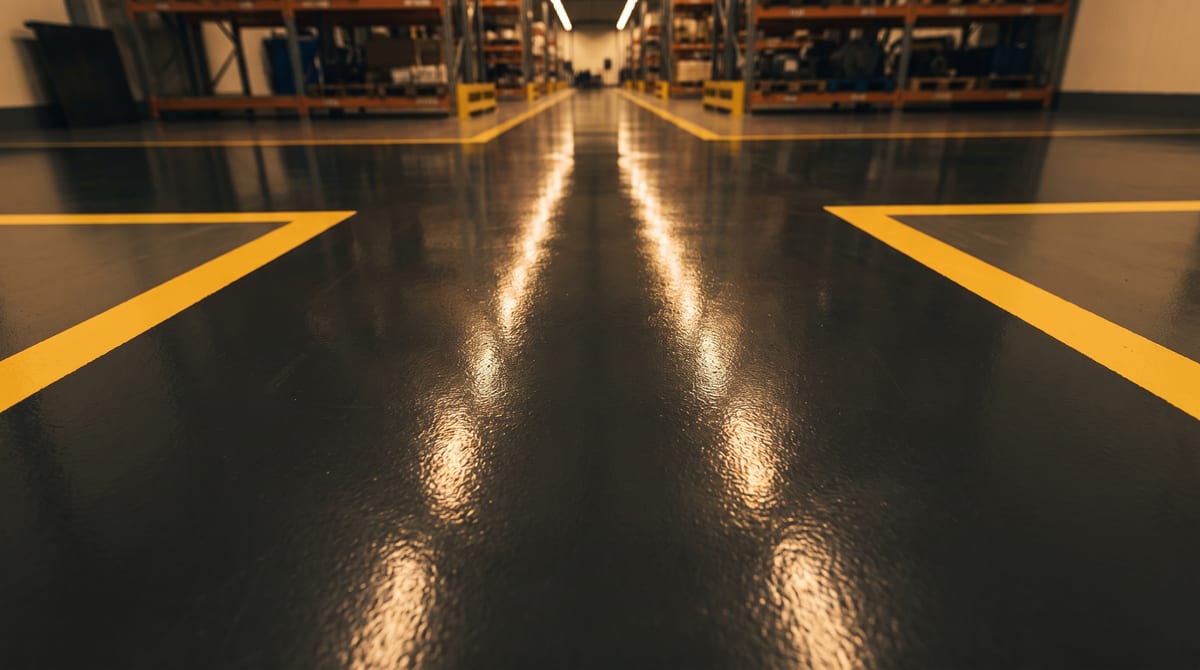
Family garages, home gyms, workshops, storage, light-commercial floors. No joints means no grout to seal and nothing for oil to sit in, the whole floor wipes down in a pass, and the job is done in a day instead of a week.
Mechanically ground, never acid-etched. The prep is the reason a coating is still down in five years.
See epoxy finishesTile wins
When you need to replace one square, not resurface a floor.
If you genuinely work on cars (jack stands, transmission jacks, things that get dropped), tile’s repairability is a real advantage and we are not going to pretend otherwise. Keep spares from the same batch and damage is a swap rather than a patch. Tile also gives you a range of looks a coating cannot.
We don’t install it, and there are good tile setters in San Diego County who do.





Questions
Epoxy vs tile FAQ
Is epoxy or tile better for a garage floor?
Does epoxy chip if you drop something heavy on it?
Can you put epoxy over an existing tile garage floor?
What about the interlocking plastic garage tiles?
Do you install tile?
What a coated garage costs, and what moves the number: what it costs.
Get started
Get your free epoxy quote
Tell us about the space and we’ll call within one business day to book your free in-home visit. No charge, no obligation to book.